
 Posts
Posts









Drought-hit California farmers abandoning vegetable fields
Last Updated: Monday, January 26, 2009 10:48 AM ET
The Associated Press
Consumers may pay more for spring lettuce and summer melons in grocery stores now that California farmers have started abandoning their fields in response to a crippling drought.California's sweeping Central Valley grows most of the fruits and vegetables in the United States in normal years, but this winter thousands of hectares are turning to dust as the state hurtles into the worst drought in nearly two decades.Federal officials' recent announcement that the water supply they pump through the nation's largest farm state would drop further was enough to move John (Dusty) Giacone to forego growing vegetables so he can save his share to drip-irrigate 400 hectares of almond trees."Taking water from a farmer is like taking a pipe from a plumber," said Giacone, a fourth-generation farmer in the tiny community of Mendota. "How do you conduct business?"The giants of California agribusiness are the biggest economic engine in the valley, which produces every cantaloupe on store shelves in summer months, and the bulk of the nation's lettuce crop each spring and fall.This year, officials in Fresno County predict farmers will only grow around 2,400 hectares of lettuce, roughly half the area devoted to growing greens in 2005.That alone could cause a slight bump in consumer prices, unless lettuce companies can make up for the shortage by growing in areas with an abundant water supply, or the cost of cooling, packaging and shipping the crop suddenly goes down, experts say."Lettuce comes off the field and goes straight into the market, and if there's nothing coming off the field then the marketing chain goes dry, and prices go up," said Gary Lucier, an agricultural economist with the U.S. Department of Agriculture's Economic Research Service.
Restricted flow to California also hits farmers
While the dry weather has exacerbated the problem, farmers' water woes are not all drought-related.Supplies for crops and cities also have been restricted by several court decisions cutting back allocations that flow through a freshwater estuary called the Sacramento-San Joaquin Delta, the main conduit that sends water to nearly two-thirds of Californians.Environmental groups and federal scientists say the delta's massive pumps are one of the factors pushing a native fish to the brink of extinction. Last year, federal water deliveries were just 40 per cent of the normal allocations, fallowing thousands of hectares and causing nearly $309 million US in crop losses statewide.That prompted California Gov. Arnold Schwarzenegger to issue a disaster declaration, ordering state water managers to expedite any requests to move water around the state, in part so high-value crops like wine grapes, almonds and pistachio trees would stand a chance of surviving.Federal reservoirs are now at their lowest level since 1992.With such a grim outlook, many California farmers including Giacone are investing millions to drill down hundreds of metres in search of new water sources.Depending on how much it rains this winter, federal water supplies could be slashed down to nothing this year, forcing farmers to rely solely on brackish well water. But the U.S. Bureau of Reclamation won't make an official decision until late February, said Ron Milligan, the agency's Central Valley operations manager.
Concerns over possible job losses
The state's Department of Water Resources, which also ships farmers water, has promised to deliver 15 per cent of the normal allocations in October, but conditions are so dire that that's now in doubt, too."The consequences are expected to be pretty horrible in terms of farmers' revenue, but what's really disconcerting are the possible job losses," said Wendy Martin, who leads the agency's drought division. "Those communities that can least weather an economic downturn are going to be some of the places that are hit the hardest."Richard Howitt, a professor of agriculture economics at the University of California, Davis, estimates that $1.6 billion US in agriculture-related wages, and as many as 60,000 jobs across the valley will be lost in the coming months because of dwindling water.Analysts haven't yet provided any estimates of crop losses this year. But Bill Diedrich, an almond grower on the valley's parched western edge, said he's already worried he may lose some of his nut trees in the drought."The real story here is food security," Diedrich told Milligan and other officials speaking at a conference in Reno, Nev. "It's an absolute emergency and anything to get water flowing quickly is needed."In the meantime, the forecast appears to be worsening: meteorologists are predicting a dry spring, and a new state survey shows the population of threatened fish is at its lowest point in 42 years, more imperiled than previously believed."This has devastating effects not only for the guys out there in the fields with the weed whackers, but it affects the whole farming industry," said Thomas Nyberg, Fresno County's deputy agricultural commissioner. "I'm just praying for rain."
© The Canadian Press, 2009
SUPPORT YOUR LOCAL FARMER
Tuesday, January 27, 2009


Saturday, January 24, 2009
TREES DOWN, TREES DOWN, TREES DOWN!
Dear friends and neighbours,
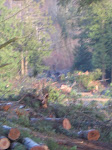
I urge every one of you to go see the latest clearcut in Central Saanich. Just west of the corner of Keating and Kirkpatrick, Randy Sewell of Raven Metals has cut a grove of large and lovely cedar trees down. Look down beside the first white house and you will see the damage that has been done to our environment.
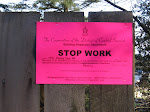
There is a bright STOP WORK order posted on the fence, far too little, far too late. The order wouldn’t be there if this was an allowable action by Mr. Sewell. Randy Sewell lost his attempt to change the Official Community Plan (OCP). It seems he has now decided to take matters into his own hands, but he is not above the law.
We must insist that the District amend the tree bylaw so that pre-emptive cuts are punished severely. The scofflaw should not be allowed to profit from the sale of the wood (nor should the District, lest they become complacent). The wood should be confiscated, sold by auction and the proceeds should be used to educate this community on the importance of the trees to our lives.
Last summer Randy Sewell held a public meeting to discuss his wish to expand the industrial zone and at that time he was cautioned by Terry Stewart of the Chamber of Commerce who told him that he was going about things the wrong way and needed to be more respectful of the rest of the community. Clearly Randy did not hear Terry’s strictures.
Please email Mayor and Council at municipalhall@csaanich.ca or phone the hall at 652-4444. Let them know that you’re tired of the trees coming down. Remind them its science not opinion.
P.S. The district has also taken a couple of very large Douglas firs from the top of the hill on Keating just before you go down the slope to the highway. These were 100 year old trees.
Dear friends and neighbours,
I urge every one of you to go see the latest clearcut in Central Saanich. Just west of the corner of Keating and Kirkpatrick, Randy Sewell of Raven Metals has cut a grove of large and lovely cedar trees down. Look down beside the first white house and you will see the damage that has been done to our environment.
There is a bright STOP WORK order posted on the fence, far too little, far too late. The order wouldn’t be there if this was an allowable action by Mr. Sewell. Randy Sewell lost his attempt to change the Official Community Plan (OCP). It seems he has now decided to take matters into his own hands, but he is not above the law.
We must insist that the District amend the tree bylaw so that pre-emptive cuts are punished severely. The scofflaw should not be allowed to profit from the sale of the wood (nor should the District, lest they become complacent). The wood should be confiscated, sold by auction and the proceeds should be used to educate this community on the importance of the trees to our lives.
Last summer Randy Sewell held a public meeting to discuss his wish to expand the industrial zone and at that time he was cautioned by Terry Stewart of the Chamber of Commerce who told him that he was going about things the wrong way and needed to be more respectful of the rest of the community. Clearly Randy did not hear Terry’s strictures.
Please email Mayor and Council at municipalhall@csaanich.ca or phone the hall at 652-4444. Let them know that you’re tired of the trees coming down. Remind them its science not opinion.
P.S. The district has also taken a couple of very large Douglas firs from the top of the hill on Keating just before you go down the slope to the highway. These were 100 year old trees.
Friday, January 2, 2009
Transit Mtg Feb 24th 10 am
I will be speaking to the Transit Commission Tuesday February 24th and I invite everyone from Central Saanich to be there. We need to show them that we mean what we say. Our route needs to be rebuilt, we need more runs, we need the loop back, we need the bus to start downtown and run all the way out to Sidney as it once did. Tanner ridge needs a minibus to connect people to the other routes. Our businesses need late night runs so they can put on extra shifts (and then they won't need to expand (sprawl) acros our farmland and rural land.
Come out and show them you care.
I will be speaking to the Transit Commission Tuesday February 24th and I invite everyone from Central Saanich to be there. We need to show them that we mean what we say. Our route needs to be rebuilt, we need more runs, we need the loop back, we need the bus to start downtown and run all the way out to Sidney as it once did. Tanner ridge needs a minibus to connect people to the other routes. Our businesses need late night runs so they can put on extra shifts (and then they won't need to expand (sprawl) acros our farmland and rural land.
Come out and show them you care.
Wednesday, December 31, 2008
HAPPY NEW YEAR!
132 days until Election Day in this province and boy do we need a serious change of government.
We need:
132 days until Election Day in this province and boy do we need a serious change of government.
We need:
- housing for the homeless
- more money for public education
- housing for single parents
- more money for public health care
- housing for families
- a ban on P3s (public private partnerships aka boondoggles)
- housing for seniors with no health problems
- a $12 minimum wage & a guaranteed income for all
- training programs
- green programs that really are green
- help for families of drug abusers to cope with the stress
- a stronger social safety net
- a universal dental care plan
- more drug coverage under our health plan
- a limit on the size of homes that can be built
We need so much more than this, a top to bottom overhaul and a commitment to fight greed and respond to need.
Sunday, December 21, 2008
Clearing Snow!
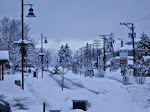
Why are the crews clearing the paths through the parks while leaving the main sidewalks up to the businesses? Obviously most businesses aren't clearing so make the sidewalks the main priority and bill the businesses for it. It's treacherous walking just to get to the bus stop because the sidewalks have been allowed to turn into ice sheets.
Why are the crews clearing the paths through the parks while leaving the main sidewalks up to the businesses? Obviously most businesses aren't clearing so make the sidewalks the main priority and bill the businesses for it. It's treacherous walking just to get to the bus stop because the sidewalks have been allowed to turn into ice sheets.
Saturday, December 20, 2008
It Doesn't Take Long for Promises to Break!
Councillors Kubek and Siklenka managed to break major promises at their very first regular council meeting on December 15th by voting IN FAVOUR of adding water cut-offs to the actions Council could take against those homeowners/suite owners who will not obey an order to shut down an illegal dwelling or suite.
I spoke out against this motion during the election campaign as did both of these candidates, but their tune changed as soon as they became councillors and were persuaded by staff to change their position.
Luckily for all concerned Councillors Bryson, Olsen, Garrison and Mason kept their promise to vote against this terrible plan. Cutting off water will not be in the toolbox in Central Saanich.
Too bad some of our new councillors are so quick to change their positions.
Councillors Kubek and Siklenka managed to break major promises at their very first regular council meeting on December 15th by voting IN FAVOUR of adding water cut-offs to the actions Council could take against those homeowners/suite owners who will not obey an order to shut down an illegal dwelling or suite.
I spoke out against this motion during the election campaign as did both of these candidates, but their tune changed as soon as they became councillors and were persuaded by staff to change their position.
Luckily for all concerned Councillors Bryson, Olsen, Garrison and Mason kept their promise to vote against this terrible plan. Cutting off water will not be in the toolbox in Central Saanich.
Too bad some of our new councillors are so quick to change their positions.
THE FARMLAND DEFENCE LEAGUE’S VIEW OF CHRISTMAS DINNER
Half of the turkey consumed in British Columbia each year is consumed during the Christmas season.
BC has 56 turkey producers who generated $41.9 million in turkey sales in 2007
BC is pretty self-reliant when it comes to turkey. We import less than 2% of the turkey we produce domestically.
British Columbians are the third largest turkey gobblers in Canada (behind Ontario and Quebec). We consume twice the amount of turkey that Albertans do.
Relish the Thought
12% of the cranberries being served on tables around the continent this holiday season came from BC, and more specifically from 88 cranberry farms in the Fraser Valley, where the mild climate and wet flood plain provide ideal growing conditions for BC’s top berry crop.
Although the packaging doesn’t show it, BC’s cranberry producers, like Barnston Island’s Opus Cranberries, are major suppliers to Ocean Spray Cranberries.
The Fort Wine Company in Fort Langley has shown that cranberries also make excellent wine.
Holiday Ham instead of Turkey?
BC’s 175 pork producers raise about 300,000 hogs/year. Yet between 70 -75% of the pork eaten in BC is imported.
An Eye for an Eye
Serving russets or nugget potatoes this holiday? In fact, British Columbia produces 35 different varieties of potatoes.
The largest field vegetable crop in the province, BC produces 71,000 tonnes of potatoes annually. But we import 107,753 tonnes (worth over $59.3 million) each year, mostly from the US (Washington State and Idaho).
72% of BC’s table potatoes are grown in the Fraser Valley.
While BC is a net importer of potatoes, we are a net exporter of seed potatoes. Known as “Spud Valley”, the Pemberton Valley’s rich volcanic soils enable it to produce the largest variety of seed potatoes in the world, providing potato farmers around the globe with BC seed potatoes.
Apple or Pumpkin Pie?
In 2002, just 11,000 acres of orchards in the Okanagan, Similkameen and Creston Valleys produced $72.3 million for the BC economy – and a billion apples. BC produces 30% of the apples grown in Canada.
We consume only 25% of those. The average British Columbian eats only 75-100 apples/year – far less than the apple a day recommended to keep the doctor away.
That means that BC exports about 75% of the apples we grow. Yet we import a lot, too. Our biggest competitor for our own and international markets is Washington State which, although they have similar climate and growing conditions, produces up to 20 times the amount of apples that BC does.
If your holiday pie is pumpkin instead of apple, chances are the pumpkin was grown in the USA. Although BC produces approximately 3 million pounds of pumpkins annually, most of those are the large stock used for Hallowe’en jack-o-lanterns. Canada imports the vast majority of pumpkin used for human consumption.
Vegetables
Holiday salad? Although Canada produces 78 tonnes of lettuce a year, we import 305 tonnes. Most of our imports come from the US, and predominantly California (the “1,000 mile Caesar salad”).
In 2001, 659 acres of BC farmland produced 6.1 million pounds of Brussells Sprouts, representing $2.4 million in farm gate receipts.
BC grows 50 types of vegetables and 90% of the province’s vegetables are grown in the Fraser Valley.
In 2002 BC fresh & processed field vegetable production was worth $32 million, while our imports were more than 10 times that or $332 million.
The US represents 80% of all fresh field vegetable imports and 85% of processed field vegetable imports to BC, and California alone makes up 72% of that. Global warming and domestic water consumption are causing severe water shortages in California that are expected to significantly affect agriculture.
Global food shortages in 2008 saw riots and conflict around the world. BC has experienced some increases in food prices, but not as much as Washington State, where prices rose 15%.
Although the food security crisis has not reached BC’s marketplace yet, we are vulnerable. Less than 5% of this province’s land base is suitable for agriculture.
Between 2002 and 2007, BC lost 10,200 acres of farmland from its Agricultural Land Reserve, with most of those losses from the Fraser Valley where rich alluvial soils combine with a mild climate and long growing season to provide the province’s best agricultural productivity. Of the 7.500 acres added to the ALR during this same period, most of the lands were of lowest soil ratings and were located in northern parts of British Columbia, which has colder climate and a shorter growing season.
Thousands of additional acres of farmland were lost to “non-farm uses” including roads and highways, port and airport expansions and country estates.
The Ministry of Agriculture’s British Columbia Food Self-Reliance Report (2007) indicates that BC will need 240,000 additional acres of farmland near urban centres (for irrigation) and 1 million acres of rangeland to meet the needs of our population by 2025.
Let’s make 2009 the year we draw a hard edge around the ALR. Happy holidays everyone.
Directors
Farmland Defence League of BC
Half of the turkey consumed in British Columbia each year is consumed during the Christmas season.
BC has 56 turkey producers who generated $41.9 million in turkey sales in 2007
BC is pretty self-reliant when it comes to turkey. We import less than 2% of the turkey we produce domestically.
British Columbians are the third largest turkey gobblers in Canada (behind Ontario and Quebec). We consume twice the amount of turkey that Albertans do.
Relish the Thought
12% of the cranberries being served on tables around the continent this holiday season came from BC, and more specifically from 88 cranberry farms in the Fraser Valley, where the mild climate and wet flood plain provide ideal growing conditions for BC’s top berry crop.
Although the packaging doesn’t show it, BC’s cranberry producers, like Barnston Island’s Opus Cranberries, are major suppliers to Ocean Spray Cranberries.
The Fort Wine Company in Fort Langley has shown that cranberries also make excellent wine.
Holiday Ham instead of Turkey?
BC’s 175 pork producers raise about 300,000 hogs/year. Yet between 70 -75% of the pork eaten in BC is imported.
An Eye for an Eye
Serving russets or nugget potatoes this holiday? In fact, British Columbia produces 35 different varieties of potatoes.
The largest field vegetable crop in the province, BC produces 71,000 tonnes of potatoes annually. But we import 107,753 tonnes (worth over $59.3 million) each year, mostly from the US (Washington State and Idaho).
72% of BC’s table potatoes are grown in the Fraser Valley.
While BC is a net importer of potatoes, we are a net exporter of seed potatoes. Known as “Spud Valley”, the Pemberton Valley’s rich volcanic soils enable it to produce the largest variety of seed potatoes in the world, providing potato farmers around the globe with BC seed potatoes.
Apple or Pumpkin Pie?
In 2002, just 11,000 acres of orchards in the Okanagan, Similkameen and Creston Valleys produced $72.3 million for the BC economy – and a billion apples. BC produces 30% of the apples grown in Canada.
We consume only 25% of those. The average British Columbian eats only 75-100 apples/year – far less than the apple a day recommended to keep the doctor away.
That means that BC exports about 75% of the apples we grow. Yet we import a lot, too. Our biggest competitor for our own and international markets is Washington State which, although they have similar climate and growing conditions, produces up to 20 times the amount of apples that BC does.
If your holiday pie is pumpkin instead of apple, chances are the pumpkin was grown in the USA. Although BC produces approximately 3 million pounds of pumpkins annually, most of those are the large stock used for Hallowe’en jack-o-lanterns. Canada imports the vast majority of pumpkin used for human consumption.
Vegetables
Holiday salad? Although Canada produces 78 tonnes of lettuce a year, we import 305 tonnes. Most of our imports come from the US, and predominantly California (the “1,000 mile Caesar salad”).
In 2001, 659 acres of BC farmland produced 6.1 million pounds of Brussells Sprouts, representing $2.4 million in farm gate receipts.
BC grows 50 types of vegetables and 90% of the province’s vegetables are grown in the Fraser Valley.
In 2002 BC fresh & processed field vegetable production was worth $32 million, while our imports were more than 10 times that or $332 million.
The US represents 80% of all fresh field vegetable imports and 85% of processed field vegetable imports to BC, and California alone makes up 72% of that. Global warming and domestic water consumption are causing severe water shortages in California that are expected to significantly affect agriculture.
Global food shortages in 2008 saw riots and conflict around the world. BC has experienced some increases in food prices, but not as much as Washington State, where prices rose 15%.
Although the food security crisis has not reached BC’s marketplace yet, we are vulnerable. Less than 5% of this province’s land base is suitable for agriculture.
Between 2002 and 2007, BC lost 10,200 acres of farmland from its Agricultural Land Reserve, with most of those losses from the Fraser Valley where rich alluvial soils combine with a mild climate and long growing season to provide the province’s best agricultural productivity. Of the 7.500 acres added to the ALR during this same period, most of the lands were of lowest soil ratings and were located in northern parts of British Columbia, which has colder climate and a shorter growing season.
Thousands of additional acres of farmland were lost to “non-farm uses” including roads and highways, port and airport expansions and country estates.
The Ministry of Agriculture’s British Columbia Food Self-Reliance Report (2007) indicates that BC will need 240,000 additional acres of farmland near urban centres (for irrigation) and 1 million acres of rangeland to meet the needs of our population by 2025.
Let’s make 2009 the year we draw a hard edge around the ALR. Happy holidays everyone.
Directors
Farmland Defence League of BC
Subscribe to:
Posts (Atom)