
 Posts


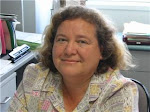





My name is Sue Stroud and it's what's in my heart that I want to talk to you about tonight.
What's in here is a deep and abiding love for this place called Central Saanich.
I love the beauty of this place. I love her heritage and I love her people.
I came here as a teenager 35 years ago. For 30 of those years I have lived right here on Tanner Road, in Saanichton and in Brentwood Bay. I know our community well. I went to Mt. Newton School, picked strawberries on the Querin's farm on Veyaness, climbed Bear Hill for picnics at Elk Lake, and biked to Mt Newton to visit my friends. I have always had very happy memories of this place.
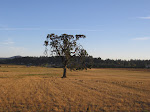
And they are rural memories, memories of the smell of berry stained fingers, and the look of the farms in the morning and the song of the skylarks that have flown away from here now.
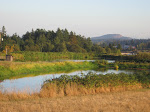
When I'm at work, and need a break from the demands of the computer and the phone, I close my eyes and picture the Inlet & the Malahat in the sunset or Mt Newton Valley in the mist.
It is this sense of place that makes me ask you for a seat at the table. I can't promise that I will have all the answers, I know for sure I don't. But I can promise that I will listen and study and learn, and then listen to you some more.
I know that the issues are often difficult and contentious and that sometimes there is no right answer. But I also know that good people, working together, can build a community that works for everyone.
I support the Official Community Plan and I see it as our vision for our community. We need to take that vision and cultivate it. We need to make sure all of our citizens are involved in it.
When I was a student at Mt Newton I helped build the trail in Centennial Park. Five years ago I helped save the Brentwood Bay ferry and I can't believe we have to do it again already. Two years ago I helped my mother and her friends get a solar powered light for the crosswalk up the street. I am now part of a group of people who would like to develop some community gardens so everyone can enjoy their own harvest.
I believe we need to be building REAL affordable housing so that people who love this place won't be driven away. Those who wish to develop here, should have to dream our dream--we are not Langford, we are not Sidney, we are ourselves.
We do need more chance to talk and dream together and gently tend what nature has given us.
We need to value our farmers and their farmland and make sure that the land is safe, the farmers are prosperous and that there are new farmers to tend our breadbasket. This means engaging the schools in our rural dream. Farming is science, and art, and heritage and mechanics. And it is vital to our well-being.
We need to respect our First Nations neighbours. Their elders have as much to teach us as any textbook. Their life-experience is full of this place. They call the mountain Lau wel naw, Place of Refuge. I see the whole of Central Saanich as a place of refuge from the noisy world outside. When I hear the drums at pow-wow I hear the heartbeat of the land beneath us.
I am of this place. I will, with your help, take care of this place.
Thank you.
Showing posts with label First Nations. Show all posts
Showing posts with label First Nations. Show all posts
Sunday, November 11, 2007


Thursday, September 27, 2007
The Earth’s Blanket by Nancy J. Turner
Traditional Teachings for Sustainable Living
The Earth’s Blanket is a book full of humour, lessons learned, lessons not yet learned and an urgent message for the world.
Nancy Turner, who teaches at UVic, uses First Nation’s stories and personal experiences to illustrate her point, or rather, nature’s point, that everything is one. Once you’ve read this you’ll never look at a mountain, a woven basket or a field of wildflowers the same way again. It’s the story of people who used everything around them so sustainably and successfully that the first new arrivals who met them didn’t think they were using much of anything. A culture for whom ‘using’ would come to mean ‘using up’ couldn’t understand the incredibly complex relationship between the First People and the land they inhabited.
Once you’ve read it you’ll be able to answer those who think it is no big deal to destroy Bear Mountain. One friend said to me “they just call everything sacred.” Yep, they do, but for very good reasons.
Mountains are sacred because the clearest, freshest waters flow down their slopes. The closer you get to the source, the closer you get to the creator. The best blueberries are found near the treeline. Climbing a mountain brought you closer to the giver of these gifts. Mountains are full of medicinal plants. It seems an irony that a Ronald McDonald House is being built on Bear Mountain at the expense of the sacred land and the plants that are the medicines of the aboriginal people in our midst.
In this book you’ll read about the giggling berry boys who try and hide themselves from the ‘foul-mouthed woman’ and the elegant steps required to make a good halibut fishhook. You’ll start to understand why words like q’waq’wala7owkw (“keep it living”), need to become part of our daily vocabulary if we are to continue to be a part of the planetary organism.
First Nation’s had the tools to destroy the environment, but after thousands of years living on this land they had learned to preserve and not destroy (until we came to tempt them with trade goods). They had weirs with a large hole at one end so that many of the fish could escape to spawn. They used controlled burning to refresh the food and tool supply. They knew that fire reduces insects and that the new shoots that come up after a fire are tasty for both humans and the wildlife they need for meat. They knew that berry plants produce heavily a couple of years after a fire and they understood the sequence of growth and re-creation that followed fire. First Nations were careful and rotated their activities “burning one hill and using the other.”
This is a book about philosophy and practicality; about truly integrated resource management and agro-ecosystems where the natural and the domesticated are blended to create beautiful and useful Garry Oak Meadows full of edible camas flowers and glacier lilies.
T’ekilakw means “place of manufactured soil” and refers to the root gardens cultivated on the tidal flats: gardens that were tended carefully and staked out to mark ownership. Aboriginal agriculture was “not only sustainable, but actually restorative” says the author. They understood that destructive practices would be punished either through supernatural means or the direct loss of the resource. A careless person could be killed for polluting a stream. The aboriginal peoples of British Columbia understood the importance of gratitude and of giving thanks to the flora and fauna that fed and clothed and healed them. First Foods ceremonies greeted the first berries and salmon each year. Little gifts of tobacco or string were left as offerings at berry sites. Prayers were said before taking medicinal plants and you were restricted as to how many stems or pieces you could take. Showing gratitude taught people not to take the earth’s gifts for granted.
Hishuk ish Tslawalk, “everything is one” is the title of the chapter on interconnectedness. Once you’ve read it you’ll understand that every woman, child, man, plant, animal and landscape worked together to create an incredibly rich First Nations culture. You’ll learn that some salmon are named after flowers that are blooming when that specie’s run begins.
The people were indigenous: they knew and understood the total landscape linkage from the tops of the mountains to the gravely beds of the streams feeding down into the bountiful ocean. They knew it was wrong to log at the edge of the mountain streams because the water would heat up and the salmon wouldn’t return to spawn in warm water. The land and all it produces is part of who these people are. When nature is destroyed so is the knowledge, art, medicine and heart of the people. When the wild cranberry bog (the lowlands below Stelly’s School in Central Saanich) were drained by the farmers to create more fields, the local First Nations’ families mourned the loss of a traditional harvest site: a site that was a part of themselves.
“’Everything is one’ is a profound concept. The complex webs that connect the past with the future, the oceans and rivers with the land, the plants with the animals, and the people with them all are breaking down. As they fragment and erode so does the earth’s capacity to sustain us all.” We are unravelling Earth’s blanket. This is a book about choices and consequences. Read it. Understand it. Give it as a gift.
Subscribe to:
Posts (Atom)