
 Posts
Posts







Tree-Lined Streets 'Cut Asthma'
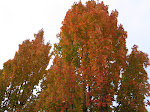
Children who live in tree-lined streets have lower rates of asthma, a New York-based study suggests.
BBC News
Columbia University researchers found that asthma rates among children aged four and five fell by 25% for every extra 343 trees per square kilometre.
They believe more trees may aid air quality or simply encourage children to play outside, although they say the true reason for the finding is unclear.
The study appears in the Journal of Epidemiology and Community Health.
US rates of childhood asthma soared 50% between 1980 and 2000, with particularly high rates in poor, urban communities.
In New York City, asthma is the leading cause of admission to hospital among children under 15.
The researchers found the city had an average of 613 street trees per square kilometre, and 9% of young children had asthma.
The link between numbers of trees and asthma cases held true even after taking into account sources of pollution, levels of affluence and population density, the researchers said.
However, once these factors were taken into account, the number of trees in a street did not appear to have any impact on the number of children whose asthma was so severe that they required hospital treatment.
Exposure theory
Some experts believe that children who are exposed to few microbes in early life are at an increased risk of asthma because their immune systems do not get the practice they need at fighting infection. Therefore, if a tree-lined street encourages outside play, it might help reduce the risk of asthma by maximising the odds that children will be exposed to microbes.
However, trees are also a source of pollen, which may potentially exacerbate asthma symptoms in vulnerable children.
Lead researcher Dr Gina Lovasi admitted the effect, if any, of trees was far from clear.
She said: "There may be something else healthful about the areas that had more trees. "For example, trees could be more abundant in areas that are well maintained in other ways."
Leanne Male, assistant director of research at the charity Asthma UK, said: "Previous research looking at the influence of the environment on levels of asthma has focused on negative aspects, such as pollution and chemical exposure. "This innovative report is the first to look specifically at the potentially beneficial effects of trees in urban areas and raises some interesting issues. "However, there are a number of other factors that have not been considered, for example whether the families involved have pets.
"Despite the need for further work, this is a positive first step into a new area of research linking the environment and asthma."
New York City is planning to plant 1 million extra trees by 2017.
TreeLink
352 S. Denver St., Suite 315
Salt Lake City, UT 84111
Office 801-363-3435
Fax 801-363-3532
Cell 801-971-7101
www.treelink.org
Join Our Mailing List!
Friday, November 7, 2008


Sunday, October 26, 2008
The Campaign Leaflet
"Hello, I'm Sue Stroud:
As your neighbour in Central Saanich, I am running for Council to give you a voice at the table. Our community is at a crossroads. We can develop every parcel of land and leave nothing for future generations, or we can protect rural and agricultural land to help ensure food security for all.
I will work to protect the environment, the rural character of Central Saanich and our quality of life. Together we can build a strong, vibrant and sustainable future for our community."
Why You Should Vote For Me
As a 38-year resident of Central Saanich, I am familiar with the complex and varied issues of interest and concern to citizens. I am committed to working on your behalf in the best interest of the community. Having attended and participated in regular Council and Committee meetings and other local government proceedings over a period of six years, I have accumulated a wealth of knowledge and experience that I believe will enable me to be an effective member of Council.
A Proven Record of Commitment, Dedication and Service to the Community
· Former Member of the Central Saanich Heritage Committee
· Member of the Central Saanich Energy Committee and Transportation Management Association
· Member of the Central Saanich Delegation that presented the community’s public transportation concerns and Tanner Ridge citizens’ petition to BC Transit
· Member of the successful ‘Save Our Ferry Committee’ that worked to retain the Brentwood Bay-Mill Bay Ferry Service
· With other community members, collected 1660 signatures in an attempt to persuade Council to save the village trees during the Brentwood Bay Revitalization Project
· Secured the necessary insurance funding for the new soft plastics recycle depot initiative at the Municipal Hall
· Advocate for subsidized and affordable housing
What You Can Expect in the Future
Community Building and Co-operation: A Commitment to Include Citizens in the Decision-Making Process
· Repeal the undemocratic motions from Sept 2007 that made it harder for citizens to be heard and participate in decisions affecting them
· Create new citizen committees to advise Council on environmental issues and other matters of importance to the community
· Develop a dispute resolution system to assist Council, District Staff and neighbours to resolve difficult issues
· Initiate a process of regular tri-governmental meetings with First Nations to ensure they are included in the discussions
Preservation: A Commitment to Rural Central Saanich
· Lobby senior levels of government for more help for farming families such as buyouts, lease-backs, tax changes to protect wildlands and habitat, strengthening the ALR & pensions
· Lobby provincial government for funding for a full-time environmental planner to assess all projects, search for grants, advise on sustainability issues, report on the state of our environment and provide periodic measurements and analysis
· Find more funding and support for community groups seeking to protect and restore our environment and to build community gardens and food forests
· Encourage more community workshops on the environment with a focus on sustainable farming, and protection of Saanich Inlet from over-development
· Protect our heritage -- not just our history, culture, traditions and buildings -- but the natural environment that gives Central Saanich its character and ambience and makes it a special place to live
Conservation: A Commitment to Responsible Fiscal Management, Sound Decision-Making and Sustainable Principles
· Use our financial resources wisely and carefully and live within our means
· Find less costly, more sustainable ways to maintain our infrastructure and public assets
· Respect our natural environment and conserve land and water resources
· Assess the community’s carbon footprint and find ways to collectively reduce it; report out regularly on our progress
· Make the Precautionary Principle the first measure and bottom line of everything we do
Saturday November 15th
Vote for Sue Stroud
All Candidates meetings:
Thursday Nov 6th, 7 to 9 pm at Bayside School, hosted by the Chamber of Commerce and the Peninsula News Review
Wednesday Nov 12th, 7 to 9:30 pm, Seniors Centre, 1229 Clarke Road (beside the Library), hosted by the Central Saanich Ratepayers’ Association
You can vote at the Municipal Hall 1903 Mt. Newton X Road or at the Cultural Centre at the Library.
You can vote early on Nov 5th or 12th at the Municipal Hall.
For details see http://www.centralsaanich.ca/hall/Departments/Administration/election.htm or call the Municipal Hall at 250-652-4444
Contact Sue at 250-652-3278 or by emailing sue_stroud@hotmail.com
See also http://centralsaanichnewsviews.blogspot.com/ for further information
· Repeal the undemocratic motions from Sept 2007 that made it harder for citizens to be heard and participate in decisions affecting them
· Create new citizen committees to advise Council on environmental issues and other matters of importance to the community
· Develop a dispute resolution system to assist Council, District Staff and neighbours to resolve difficult issues
· Initiate a process of regular tri-governmental meetings with First Nations to ensure they are included in the discussions
Preservation: A Commitment to Rural Central Saanich
· Lobby senior levels of government for more help for farming families such as buyouts, lease-backs, tax changes to protect wildlands and habitat, strengthening the ALR & pensions
· Lobby provincial government for funding for a full-time environmental planner to assess all projects, search for grants, advise on sustainability issues, report on the state of our environment and provide periodic measurements and analysis
· Find more funding and support for community groups seeking to protect and restore our environment and to build community gardens and food forests
· Encourage more community workshops on the environment with a focus on sustainable farming, and protection of Saanich Inlet from over-development
· Protect our heritage -- not just our history, culture, traditions and buildings -- but the natural environment that gives Central Saanich its character and ambience and makes it a special place to live
Conservation: A Commitment to Responsible Fiscal Management, Sound Decision-Making and Sustainable Principles
· Use our financial resources wisely and carefully and live within our means
· Find less costly, more sustainable ways to maintain our infrastructure and public assets
· Respect our natural environment and conserve land and water resources
· Assess the community’s carbon footprint and find ways to collectively reduce it; report out regularly on our progress
· Make the Precautionary Principle the first measure and bottom line of everything we do
Saturday November 15th
Vote for Sue Stroud
All Candidates meetings:
Thursday Nov 6th, 7 to 9 pm at Bayside School, hosted by the Chamber of Commerce and the Peninsula News Review
Wednesday Nov 12th, 7 to 9:30 pm, Seniors Centre, 1229 Clarke Road (beside the Library), hosted by the Central Saanich Ratepayers’ Association
You can vote at the Municipal Hall 1903 Mt. Newton X Road or at the Cultural Centre at the Library.
You can vote early on Nov 5th or 12th at the Municipal Hall.
For details see http://www.centralsaanich.ca/hall/Departments/Administration/election.htm or call the Municipal Hall at 250-652-4444
Contact Sue at 250-652-3278 or by emailing sue_stroud@hotmail.com
See also http://centralsaanichnewsviews.blogspot.com/ for further information
Tuesday, September 30, 2008
The Tortoise and The Hare: A Parable for Central Saanich
We have been characterised as a ‘go slow’ municipality by some, as if that were a bad thing. In fact ‘go slow’ is exactly what Central Saanich should be doing given the changes we are facing. It’s time to be sure we have assessed what we have and what we need for future generations. It’s time take an environmental inventory of our water, our trees, our wildlife, the stresses on our land and on our air.
Are we willing to say goodbye forever to the eagles who grace our skies and rest in our tree tops? Are we willing to say goodbye forever to the salmon and the seals and the otters in the inlet? Do we care if our aquifers are draining and recharge is impossible because we’ve over paved? Do we care about the overheated microclimate we’ve created because we took down so many trees? Do we care about the costs incurred in terms of more frequent paving and the need for more storm drains because we cut the trees?
The accelerated pace of consumption has blinded us to the need to conserve finite resources. There is a total disconnection between what we buy and the resources used to make these products. We buy tomatoes from California because we think they are cheaper when, in fact, they are more expensive than local tomatoes because we are not factoring in all the costs, such as the cost to the environment of hauling chemically ripened fruit long distances in polluting vehicles.
The same goes for the setting of our municipality. We say we love its green coolness and its rural ambience, but then we want to build outside our urban containment areas and buffer zones and we claim that we only want to build on unfarmable land as if that were the only test with which we need to concern ourselves.
It’s time we looked more closely at climate, food security, rural preservation, conservation of resources and whether we have a moral right to use up everything and leave nothing for the future. It’s time we measured our ‘success’ in terms of need rather than greed. It’s time we hired an environmental planner with the power to overrule excessive footprinting.
So remember the tortoise who beat the hare and take your time to go slow, measure and set a sustainable pace!
We have been characterised as a ‘go slow’ municipality by some, as if that were a bad thing. In fact ‘go slow’ is exactly what Central Saanich should be doing given the changes we are facing. It’s time to be sure we have assessed what we have and what we need for future generations. It’s time take an environmental inventory of our water, our trees, our wildlife, the stresses on our land and on our air.
Are we willing to say goodbye forever to the eagles who grace our skies and rest in our tree tops? Are we willing to say goodbye forever to the salmon and the seals and the otters in the inlet? Do we care if our aquifers are draining and recharge is impossible because we’ve over paved? Do we care about the overheated microclimate we’ve created because we took down so many trees? Do we care about the costs incurred in terms of more frequent paving and the need for more storm drains because we cut the trees?
The accelerated pace of consumption has blinded us to the need to conserve finite resources. There is a total disconnection between what we buy and the resources used to make these products. We buy tomatoes from California because we think they are cheaper when, in fact, they are more expensive than local tomatoes because we are not factoring in all the costs, such as the cost to the environment of hauling chemically ripened fruit long distances in polluting vehicles.
The same goes for the setting of our municipality. We say we love its green coolness and its rural ambience, but then we want to build outside our urban containment areas and buffer zones and we claim that we only want to build on unfarmable land as if that were the only test with which we need to concern ourselves.
It’s time we looked more closely at climate, food security, rural preservation, conservation of resources and whether we have a moral right to use up everything and leave nothing for the future. It’s time we measured our ‘success’ in terms of need rather than greed. It’s time we hired an environmental planner with the power to overrule excessive footprinting.
So remember the tortoise who beat the hare and take your time to go slow, measure and set a sustainable pace!
Sunday, September 21, 2008
Saving Trees Saves Taxes
Trees are good citizens and if looked after wisely they can help a municipality like ours save large sums of money that could then be redirected for other purposes.
Costly Pavement
“The asphalt paving on streets contains stone aggregate in an oil binder. Without tree shade, the oil heats up and volatizes, leaving the aggregate unprotected. Vehicles then loosen the aggregate which grinds down the pavement. Streets are overlaid or slurry sealed every 7-10 years over a 30-40 year period, after which reconstruction is required. A slurry seal costs approximately $0.27/sq.ft. or $50,000/linear mile (US figures) but because the oil does not dry out as fast on a shaded street as it does on a street with no shade trees, this street maintenance can be deferred. The slurry seal can be deferred from every 10 years to every 20-25 years for older streets with extensive tree canopy cover.” (Tree Guidelines for San Joaquin Valley Communities 1999)
Expensive Storm Water Management
“In Milwaukee, where urban trees cover about 16 per cent of the city, trees reduce storm water flows by 22 per cent. The city saves an estimated $15.4 million by avoiding the construction of additional retention capacity. In Austin, heavy rains make storm water management a priority issue. Austin's tree canopy, almost twice that of Milwaukee's at approximately 30 per cent, reduced storm water flow by 28 per cent, providing the city with an estimated $122 million in savings.” (MacDonald, 1996)
“The canopy of a street tree absorbs rain, reducing the amount of water that will fall on pavement and then must be removed by a storm water drainage system. In one study, an 8-year old Cork Oak intercepted 27 percent of the gross rainfall, while a 9-year old Bradford Pear intercepted 15 percent. Savings are possible since cities can install surface water management systems that handle smaller amounts of runoff.” (Xiao, et. al., 2000)
Thrifty Shading and Protecting
“One tree that shades your home in the city will also save fossil fuels, cutting CO2 build-up as much as 15 forest trees.” (National Arbor Day Foundation–US)
Placing deciduous trees on the south and west sides of your home will shade you in the summer and allow sunlight in, in winter. Fir trees on the north side of your home will protect you from cold winter winds.
Research reports savings of between 10 and 15 % on winter heating costs thanks to trees acting as windbreaks, and cooling cost reductions of 20 & 50% in summer due to shade and cooling through evapotranspiration.” (Heisler, 1986)
Cleaning Up Our Environment
“Poplar & cottonwood trees can break down carcinogenic groundwater contaminants such as trichloroethylene (TCE) and Atrazine into harmless compounds.” (Black, 1995; EPA, 1996)
“Trees, especially those with large leaf surfaces, absorb and trap airborne dirt and chemical particles such as nitrogen oxide, sulphur dioxide, carbon monoxide and ozone. Trees also help by reducing wind speed so that heavy particles settle out.” (Nowak 1994, Harris 1992)
Decreased Crime
Studies in the US show that developments with large trees have less crime: “compared with apartment buildings that had little or no vegetation, buildings with high levels of greenery had 52 % fewer total crimes, including 48% fewer property crimes and 56 % fewer violent crimes.”
“Residents from buildings with trees reported using more constructive, less violent ways of dealing with conflict in their homes.” (Kuo and Sullivan, 2001 & 1999)
Increased Real Estate Values
“Several studies have shown that the value of homes in neighbourhoods with trees are higher than in those of comparable neighbourhoods without trees. In addition, neighbourhood green spaces or greenways typically increase the value of properties located nearby.” (Theriault et al, 2002)
Trees added $9,500 US, or more than 18% to the average sale price of a residence in a suburb of Rochester, New York. (D.J. Nowak, Benefits of Community Trees, USDA)
Increased Economic Sustainability
Businesses leasing spaces in treed developments find their workers more productive and absenteeism reduced. Trees enhance community economic stability by attracting businesses and tourists. People linger and shop longer along tree lined streets. (Michigan State University Extension, Urban Forestry; University of Washington Study)
Traffic Calming
Tall trees give the perception of making the street feel narrower, slowing people down. (National Arbor Day Foundation-US)
Costs Vs. Benefits
A study of the benefits and costs of tree planting in Chicago found that the projected value of trees (e.g. pollution reduction, energy saving, property value) is nearly three times greater than the projected costs. (McPherson et al., 1995)
“Each of us is responsible for over 4,600 pounds of carbon per year…In one year a single acre of trees can absorb as much carbon as is produced by a car driven 26,000 miles…The death of one 70 year old tree would return over 3 tons of carbon to the atmosphere.” (International Society of Arborists)
Priceless: Health & Well Being
Trees create a sense of well being that relaxes you, lowers your blood pressure and slows you down. “In laboratory research, visual exposure to settings with trees has produced significant recovery from stress within five minutes, as indicated by changes in blood pressure and muscle tension.” (Ulrich, 1984)
Symptoms of children with Attention Deficit Disorder (ADD) are relieved after contact with nature. The greener the setting the more the relief. By comparison, activities indoors such as watching TV, or outdoors in paved, non-green areas leave ADD children functioning worse. (Taylor, et al., 2001)
“Trees purify the air; they also purify the mind……if you want to save your world, you must save the trees.”
The Trees of Endor
Quotes and statistics used in this piece may be found at
http://www.treesaregood.com/home.aspx
http://www.treelink.org/docs/about.php
http://www.coloradotrees.org/benefits.htm
See also City of Saskatoon, Urban Forestry branch
This leaflet has been prepared by Sue Stroud
“The asphalt paving on streets contains stone aggregate in an oil binder. Without tree shade, the oil heats up and volatizes, leaving the aggregate unprotected. Vehicles then loosen the aggregate which grinds down the pavement. Streets are overlaid or slurry sealed every 7-10 years over a 30-40 year period, after which reconstruction is required. A slurry seal costs approximately $0.27/sq.ft. or $50,000/linear mile (US figures) but because the oil does not dry out as fast on a shaded street as it does on a street with no shade trees, this street maintenance can be deferred. The slurry seal can be deferred from every 10 years to every 20-25 years for older streets with extensive tree canopy cover.” (Tree Guidelines for San Joaquin Valley Communities 1999)
Expensive Storm Water Management
“In Milwaukee, where urban trees cover about 16 per cent of the city, trees reduce storm water flows by 22 per cent. The city saves an estimated $15.4 million by avoiding the construction of additional retention capacity. In Austin, heavy rains make storm water management a priority issue. Austin's tree canopy, almost twice that of Milwaukee's at approximately 30 per cent, reduced storm water flow by 28 per cent, providing the city with an estimated $122 million in savings.” (MacDonald, 1996)
“The canopy of a street tree absorbs rain, reducing the amount of water that will fall on pavement and then must be removed by a storm water drainage system. In one study, an 8-year old Cork Oak intercepted 27 percent of the gross rainfall, while a 9-year old Bradford Pear intercepted 15 percent. Savings are possible since cities can install surface water management systems that handle smaller amounts of runoff.” (Xiao, et. al., 2000)
Thrifty Shading and Protecting
“One tree that shades your home in the city will also save fossil fuels, cutting CO2 build-up as much as 15 forest trees.” (National Arbor Day Foundation–US)
Placing deciduous trees on the south and west sides of your home will shade you in the summer and allow sunlight in, in winter. Fir trees on the north side of your home will protect you from cold winter winds.
Research reports savings of between 10 and 15 % on winter heating costs thanks to trees acting as windbreaks, and cooling cost reductions of 20 & 50% in summer due to shade and cooling through evapotranspiration.” (Heisler, 1986)
Cleaning Up Our Environment
“Poplar & cottonwood trees can break down carcinogenic groundwater contaminants such as trichloroethylene (TCE) and Atrazine into harmless compounds.” (Black, 1995; EPA, 1996)
“Trees, especially those with large leaf surfaces, absorb and trap airborne dirt and chemical particles such as nitrogen oxide, sulphur dioxide, carbon monoxide and ozone. Trees also help by reducing wind speed so that heavy particles settle out.” (Nowak 1994, Harris 1992)
Decreased Crime
Studies in the US show that developments with large trees have less crime: “compared with apartment buildings that had little or no vegetation, buildings with high levels of greenery had 52 % fewer total crimes, including 48% fewer property crimes and 56 % fewer violent crimes.”
“Residents from buildings with trees reported using more constructive, less violent ways of dealing with conflict in their homes.” (Kuo and Sullivan, 2001 & 1999)
Increased Real Estate Values
“Several studies have shown that the value of homes in neighbourhoods with trees are higher than in those of comparable neighbourhoods without trees. In addition, neighbourhood green spaces or greenways typically increase the value of properties located nearby.” (Theriault et al, 2002)
Trees added $9,500 US, or more than 18% to the average sale price of a residence in a suburb of Rochester, New York. (D.J. Nowak, Benefits of Community Trees, USDA)
Increased Economic Sustainability
Businesses leasing spaces in treed developments find their workers more productive and absenteeism reduced. Trees enhance community economic stability by attracting businesses and tourists. People linger and shop longer along tree lined streets. (Michigan State University Extension, Urban Forestry; University of Washington Study)
Traffic Calming
Tall trees give the perception of making the street feel narrower, slowing people down. (National Arbor Day Foundation-US)
Costs Vs. Benefits
A study of the benefits and costs of tree planting in Chicago found that the projected value of trees (e.g. pollution reduction, energy saving, property value) is nearly three times greater than the projected costs. (McPherson et al., 1995)
“Each of us is responsible for over 4,600 pounds of carbon per year…In one year a single acre of trees can absorb as much carbon as is produced by a car driven 26,000 miles…The death of one 70 year old tree would return over 3 tons of carbon to the atmosphere.” (International Society of Arborists)
Priceless: Health & Well Being
Trees create a sense of well being that relaxes you, lowers your blood pressure and slows you down. “In laboratory research, visual exposure to settings with trees has produced significant recovery from stress within five minutes, as indicated by changes in blood pressure and muscle tension.” (Ulrich, 1984)
Symptoms of children with Attention Deficit Disorder (ADD) are relieved after contact with nature. The greener the setting the more the relief. By comparison, activities indoors such as watching TV, or outdoors in paved, non-green areas leave ADD children functioning worse. (Taylor, et al., 2001)
“Trees purify the air; they also purify the mind……if you want to save your world, you must save the trees.”
The Trees of Endor
Quotes and statistics used in this piece may be found at
http://www.treesaregood.com/home.aspx
http://www.treelink.org/docs/about.php
http://www.coloradotrees.org/benefits.htm
See also City of Saskatoon, Urban Forestry branch
This leaflet has been prepared by Sue Stroud
Saturday, September 13, 2008
Community Vision.Org
Take time to sign a very important petition at http://www.cscommunityvision.org/RCSPetition.aspx
Changes proposed to the Regional Growth Strategy will create pressure for more development. This election will be about development vs environment. It will be about the size of our footprint and whether we intend to leave anything for future generations. It will be about maintaining the rural community we love or becoming just like all the other rubberstamped towns like Langford.
Think about it.
Take time to sign a very important petition at http://www.cscommunityvision.org/RCSPetition.aspx
Changes proposed to the Regional Growth Strategy will create pressure for more development. This election will be about development vs environment. It will be about the size of our footprint and whether we intend to leave anything for future generations. It will be about maintaining the rural community we love or becoming just like all the other rubberstamped towns like Langford.
Think about it.
Wednesday, September 10, 2008
Apple Pie in a Regional Context: a lesson for all
The Central Saanich Regional Context Statement explains how our Official Community Plan fits into the Regional Growth Strategy of the Capital Region. The current proposed wording says we would provide municipal services outside the urban containment areas for four reasons only: health, environment, agriculture and fire suppression. On the face of it, this sounds easy as apple pie.
But right now, not only is there no recipe for the pie, we don’t know if we have any of the ingredients. What should we be checking for?
First, we don't know the carrying capacity of our land and water table. How much 'growth' is okay? Or too much? How much do we preserve for future uses? What are the climate change predictions for this area, and their impact on our carrying capacity? What are regional water consumption trends, and their longer-term affect on us? Will the proposed services help or just delay the inevitable? For these questions alone, we need a full time environmental planner to carry out environmental impact studies – with regular followups to capture and measure any changes.
Second, we have no way to measure the true need for requested exemptions – other than what is in a submission. At the very minimum, effective guidelines should require every submission be accompanied by receipts or professional reports to demonstrate they have done everything reasonable to mitigate the problem prior to requesting municipal services – and, as a matter of public interest, available at the municipal hall. The municipality should be putting together a list of expectations--acceptable proofs and acceptable third party verifiers--for those wishing services to follow. Among the expectations would be robust covenants that prevent a provision of service from becoming a ‘thin edge of the wedge’, leading to unsustainable development that further drains our resources.
Third, we need clear and unequivocal information about the impacts (health, fiscal, effectiveness of services) of proposed extension of services, and alternatives to the proposed service extension.
Fourth, guidelines embedded in the OCP. We all appreciate that using guidelines based on policies of the council would save time (and public hearings). But council policies, no matter how good, can be easily overturned by the next council. Poor foundations for the certainty needed by both citizens and developers. Rather like dicing a few crab apples into the bowl.
Given what’s riding on their decisions, we really need the cooks to overcome any temptation to improvise.
Our new OCP falls short because of vague concerns about being ‘too prescriptive.’ However, prescriptions have a role in maintaining our health and wellbeing – and may be necessary to establish the clear and constant guidelines so essential to preserving our ‘green and pleasant land’.
This isn’t about denying people clean and healthy water. This isn't about denying someone a piece of the pie. It is about making sure the tree that provides the apples is there for the next generation.
The Central Saanich Regional Context Statement explains how our Official Community Plan fits into the Regional Growth Strategy of the Capital Region. The current proposed wording says we would provide municipal services outside the urban containment areas for four reasons only: health, environment, agriculture and fire suppression. On the face of it, this sounds easy as apple pie.
But right now, not only is there no recipe for the pie, we don’t know if we have any of the ingredients. What should we be checking for?
First, we don't know the carrying capacity of our land and water table. How much 'growth' is okay? Or too much? How much do we preserve for future uses? What are the climate change predictions for this area, and their impact on our carrying capacity? What are regional water consumption trends, and their longer-term affect on us? Will the proposed services help or just delay the inevitable? For these questions alone, we need a full time environmental planner to carry out environmental impact studies – with regular followups to capture and measure any changes.
Second, we have no way to measure the true need for requested exemptions – other than what is in a submission. At the very minimum, effective guidelines should require every submission be accompanied by receipts or professional reports to demonstrate they have done everything reasonable to mitigate the problem prior to requesting municipal services – and, as a matter of public interest, available at the municipal hall. The municipality should be putting together a list of expectations--acceptable proofs and acceptable third party verifiers--for those wishing services to follow. Among the expectations would be robust covenants that prevent a provision of service from becoming a ‘thin edge of the wedge’, leading to unsustainable development that further drains our resources.
Third, we need clear and unequivocal information about the impacts (health, fiscal, effectiveness of services) of proposed extension of services, and alternatives to the proposed service extension.
Fourth, guidelines embedded in the OCP. We all appreciate that using guidelines based on policies of the council would save time (and public hearings). But council policies, no matter how good, can be easily overturned by the next council. Poor foundations for the certainty needed by both citizens and developers. Rather like dicing a few crab apples into the bowl.
Given what’s riding on their decisions, we really need the cooks to overcome any temptation to improvise.
Our new OCP falls short because of vague concerns about being ‘too prescriptive.’ However, prescriptions have a role in maintaining our health and wellbeing – and may be necessary to establish the clear and constant guidelines so essential to preserving our ‘green and pleasant land’.
This isn’t about denying people clean and healthy water. This isn't about denying someone a piece of the pie. It is about making sure the tree that provides the apples is there for the next generation.
Tuesday, September 9, 2008
September 3, 2008
Dear Mayor and Councillors,
I am really becoming more and more concerned that we are preparing policies that will do great environmental harm to our community, destroying its agricultural and intrinsic value right when we most need to be protecting it. I know this is not what any of you intend, there is not one of you that would knowingly harm Central Saanich, but this what may result if we don’t stop and gather scientific information before we go any further.
How can we allow something like the Regional Context Statement to go through when we don't even know what the baselines of sustainability are in our community? We have nothing to tell us how many homes, businesses and farms our water table can handle or whether our land will be seriously depleted of nutrients as a result of climate change. We do know that all around us others are building willy-nilly and they are undoubtedly depleting the water and other resources that are available to us all.
We have nothing to measure any of the four criteria with, we are simply trusting what others have done, who themselves have no way to measure what the environment around us can sustain. It’s not anyone’s fault that we don’t have these measures, we never understood that we needed them before, but now we know that we are in trouble and need to conserve the resources we have.
Maybe we need to take a step back and develop measures using the best science available (Dr. Weaver at UVic would be a good person to guide this process).
We have an obligation to be sure that we are doing no further harm to our environment and that what we pass on to the youngsters in our community is in the best condition possible. We have an obligation not to continue with business as usual when we can’t say with certainty that what we are doing will do no harm.
Changes need to be made immediately and going slowly is probably the most important first step we can take. We have to look at the long term and not be persuaded by immediate pressures.
The problems we are facing are global in scale, but we need to find local government solutions if we are to overcome them. The time we have to make the change is short. Will we continue to grow when growth is contra-indicated or will we have the courage to stop, examine and make the changes that are needed?
Sue Stroud
Dear Mayor and Councillors,
I am really becoming more and more concerned that we are preparing policies that will do great environmental harm to our community, destroying its agricultural and intrinsic value right when we most need to be protecting it. I know this is not what any of you intend, there is not one of you that would knowingly harm Central Saanich, but this what may result if we don’t stop and gather scientific information before we go any further.
How can we allow something like the Regional Context Statement to go through when we don't even know what the baselines of sustainability are in our community? We have nothing to tell us how many homes, businesses and farms our water table can handle or whether our land will be seriously depleted of nutrients as a result of climate change. We do know that all around us others are building willy-nilly and they are undoubtedly depleting the water and other resources that are available to us all.
We have nothing to measure any of the four criteria with, we are simply trusting what others have done, who themselves have no way to measure what the environment around us can sustain. It’s not anyone’s fault that we don’t have these measures, we never understood that we needed them before, but now we know that we are in trouble and need to conserve the resources we have.
Maybe we need to take a step back and develop measures using the best science available (Dr. Weaver at UVic would be a good person to guide this process).
We have an obligation to be sure that we are doing no further harm to our environment and that what we pass on to the youngsters in our community is in the best condition possible. We have an obligation not to continue with business as usual when we can’t say with certainty that what we are doing will do no harm.
Changes need to be made immediately and going slowly is probably the most important first step we can take. We have to look at the long term and not be persuaded by immediate pressures.
The problems we are facing are global in scale, but we need to find local government solutions if we are to overcome them. The time we have to make the change is short. Will we continue to grow when growth is contra-indicated or will we have the courage to stop, examine and make the changes that are needed?
Sue Stroud
Subscribe to:
Posts (Atom)